


This letter was written for someone who recently asked me what they should read to learn more about Christianity. I have kept the personal quality of the letter while removing any explicit details connecting it to a particular person.
The other day you asked me a simple question: What should I read, if I wanted to learn more about Christianity?
I receive this question often and the good thing about it is that it is rarely asked by someone trying to master a system. It is asked, more often, by someone who has come near the edge of something and has the sense—rightly, I think—that it would be worth the trouble to see what lies within.
One thing you said that stayed with me. You said that you feel a kind of jealousy toward those who do believe—as if they were in possession of something you could not reach.
It is an uncomfortable admission, and for that reason likely to be a truthful one.
And perhaps this is part of it: that one grows tired, at times, of the unsettled state of things. Of holding judgments in suspension, of never quite arriving anywhere definite. One begins to suspect that certainty—if it exists—is not merely an intellectual luxury, but something closer to a necessity of life.
And yet, when one turns to belief directly, it refuses to yield. It cannot be taken up like a habit or adopted like an opinion.
So one remains at a distance—close enough to recognize it, not close enough to possess it.
It would be easy to dismiss this as a passing feeling, or to explain it away. But I would not recommend that. There is often more truth in such discomfort than in the more confident positions we adopt.
What you are sensing is not merely that others believe, but that belief changes the shape of a life. It orders things. It gives a certain weight to actions that might otherwise feel provisional. And to see that from the outside is to feel, at times, both drawn and excluded.
That tension is not a failure. It is, in its way, a beginning. It suggests that you have already recognized something worth examining more closely—not as an idea, but as a possibility that refuses to leave you entirely alone.
You stand, it seems to me, not outside the Christian world entirely, but near its peripheries—as one who has passed by its doors, and heard people speaking in fragments. The imagination suggests that something there concerns you.
And yet no one, up to this point, has quite stopped and said: tolle, lege—take up and read.
Augustine heard those words, or thought he did, while sitting alone in a garden, at the moment when everything in him had come to a kind of breaking point. He took them as an instruction, opened the Scriptures, and began. That was the beginning of his conversion—and of many others since, in ways less dramatic but no less real.
So the question is not really, What should I read?
It is: When do I begin—and how, and with what?
The answer to the first question is now. For “if today you hear his voice, harden not your hearts…” (Ps. 95:8). As for the other two questions, let me answer them as briefly as I can.
1. Begin, not with ideas, but with a person
If Christianity is anything at all, it is not first a philosophy, or a moral code, or even a culture. It is the claim that something happened: that a man lived, spoke, acted, suffered, and rose—and that everything else follows from that.
So begin, if you can, not with ideas, but with a person.
Not the idea of Christianity, nor its history, nor its disputes—but with the account, plain and unadorned, of a life. A man who speaks, who moves through villages, who is misunderstood, followed, resisted; who says things at once simple and impossible, and who seems always to be addressing not crowds but individuals, one by one.
Take one of the Gospels. Read it as you would read any narrative. Do not worry about understanding everything. Do not worry about what you are “supposed” to think. Just attend to what is there.
You may find it stranger than expected. Simpler, and also more demanding. And then, perhaps later, there will arise another movement in you—the desire to understand, to ask whether such things can be true without betraying the mind.
2. Can such things be true?
At some point, the question will arise: Is this believable? Not emotionally, but intellectually. Does this cohere? Does it ask me to abandon reason, or to use it more fully?
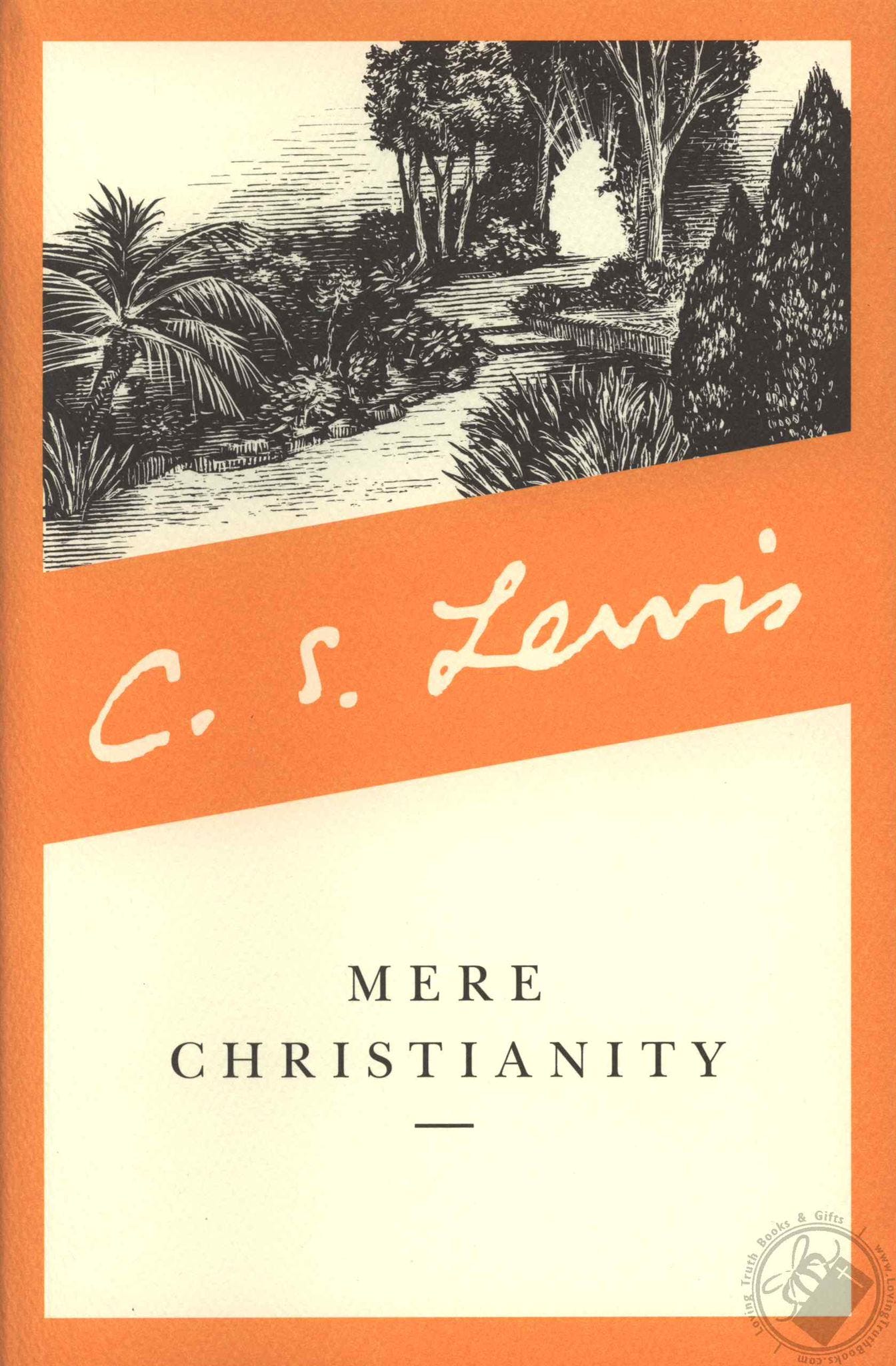
For that, a book like Mere Christianity is helpful—not because it proves everything, but because it shows that belief is not irrational. It clears away a certain kind of fog.
You may agree with it. You may not. But it will at least show you what the claim actually is.
3. Can such things be lived?
There is another question, quieter but more persistent: Does this correspond to what it feels like to be human?
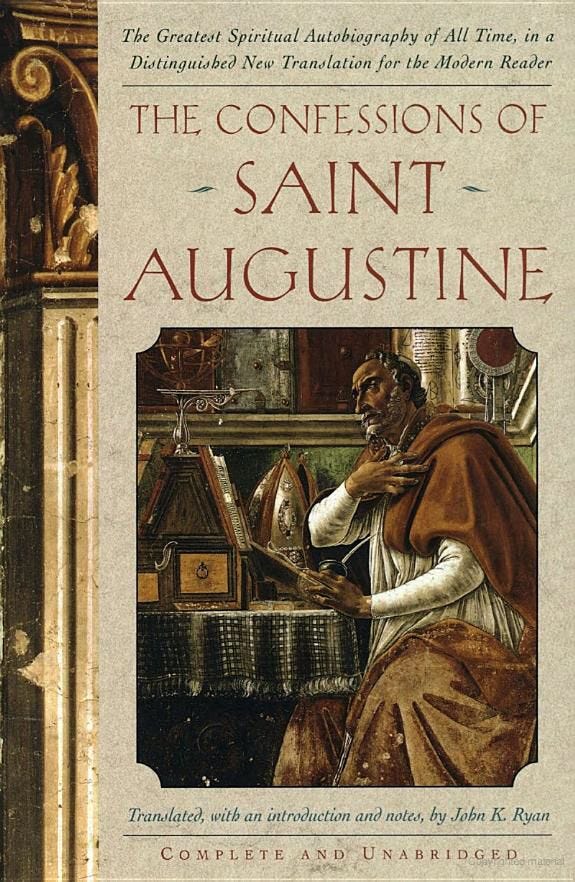
For that, you might turn to Augustine’s Confessions. It is not a treatise. It is a man telling the truth about his own restlessness—his ambitions, his distractions, his failures, and the strange way in which God pursued him through all of it.
Many people are surprised to find that a fourth-century text reads like something written yesterday.
Augustine writes not as a theorist but as a witness to his own restlessness. One reads him and has the curious impression not of learning something new, but of recognizing something that had not yet been said aloud. Time collapses a little; the centuries withdraw; and one is left with the unsettling thought that the human condition has not altered as much as one might have hoped.
But even this—text, argument, confession—remains, in a sense, incomplete.
Because if such things are true, they must appear somewhere, not only in pages but in lives. Not perfectly—never perfectly—but with enough clarity that one can say: this has taken hold here.
4. What does it look like to live such a life?
At some point, abstraction is no longer enough. If Christianity is real, it should appear somewhere—not perfectly, but concretely—in a human life.
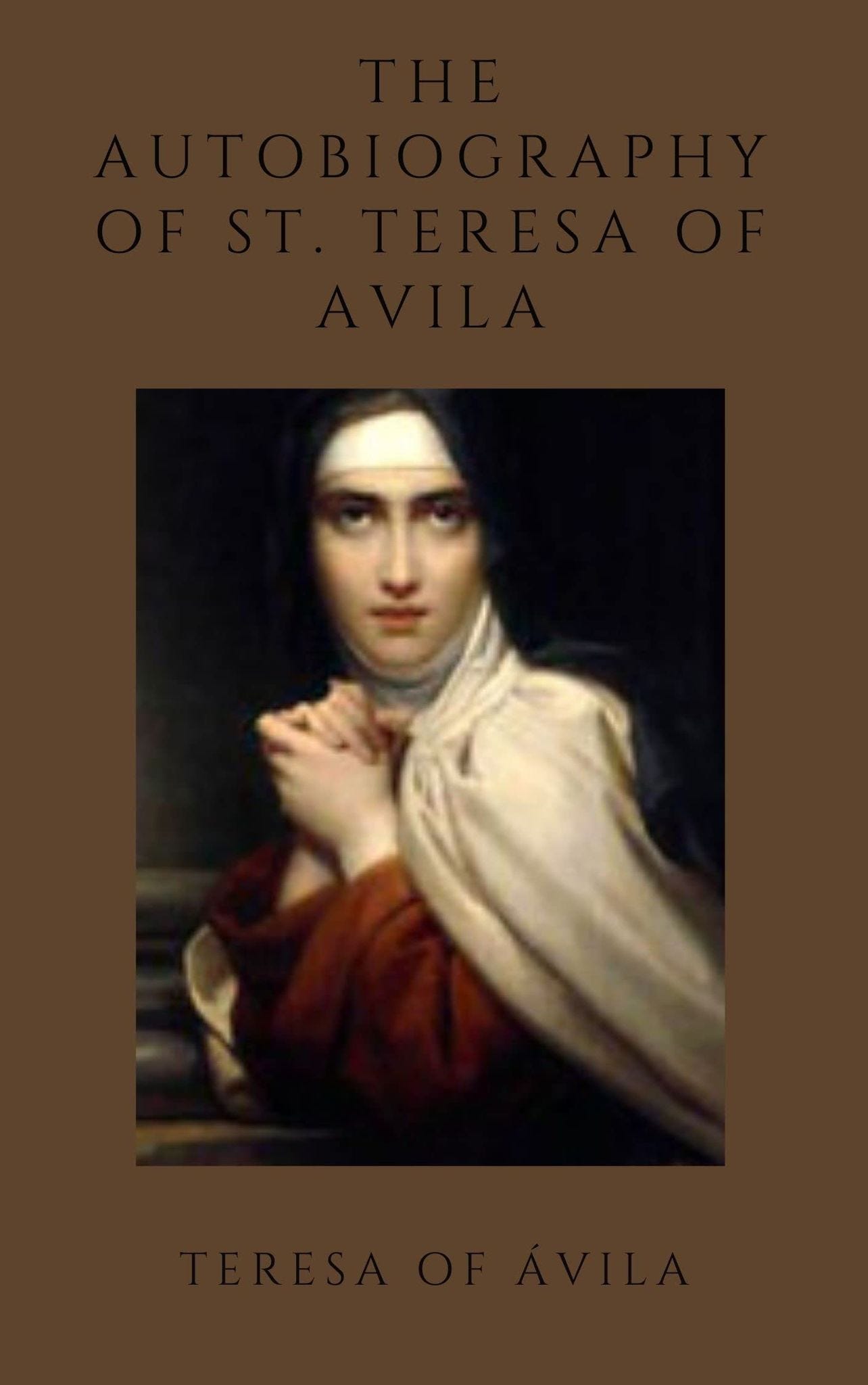
That is why I suggested Teresa of Ávila.
She is not writing for beginners. And yet, in another sense, she is exactly what a beginner needs to see: not theory, but transformation.
Teresa of Ávila is difficult, yes. At times distant, at times startlingly immediate. She does not simplify. And yet what emerges, if one stays with her, is not an abstract system but a life gradually reordered—resistances, hesitations, small fidelities accumulating into something one had not expected.
You need not understand her. It is enough, at first, simply to see that powerful transformations have taken place in the lives of people not so different from you or me. That this is not all simply imaginary.
5. After you have recovered reality, recover the imagination
There is one more path, and for many people it is the first that opens.
Not argument, not testimony, not even direct encounter, but the slow reawakening of the sense that life might be otherwise: more coherent, more deliberate, more beautiful than one has been led to suppose.
Sometimes a novel does this more effectively than any treatise. It rearranges, gently, the proportions of things. It allows one to see, without being told, that certain ways of living are thinner than they appear, and others more substantial.
One does not always begin with conviction. Sometimes one begins with attraction.

All of this may sound like a program. It is not. You do not need to read all of these books. You do not need to read them in order. In fact, it is better if you do not approach this as a task to be completed.
You are not studying a subject.
You are deciding, perhaps without yet realizing it, whether something is true, or at least whether something is possible.
So take one step. Just one. Read a Gospel. Or begin with something that draws you more easily.
And then pay attention—not only to what you think, but to what you recognize.
Because the beginning is not found in mastering a set of ideas.
It is found in noticing, perhaps for the first time, that what you have been looking for has already begun to look back at you.