

Sooner or later most of us watch the things we love get taken away: a parent, a home, a way of life we assumed would last. We are usually offered three ways to deal with it: fight, flight or freeze. We can fight against it and try and overcome it, we can run away from it and hope it doesn’t catch us, or we can become still and hope it doesn’t notice us. For most us this simply reduces to holding on a little harder or loving a little less. The first makes us bitter. The second makes us smaller.
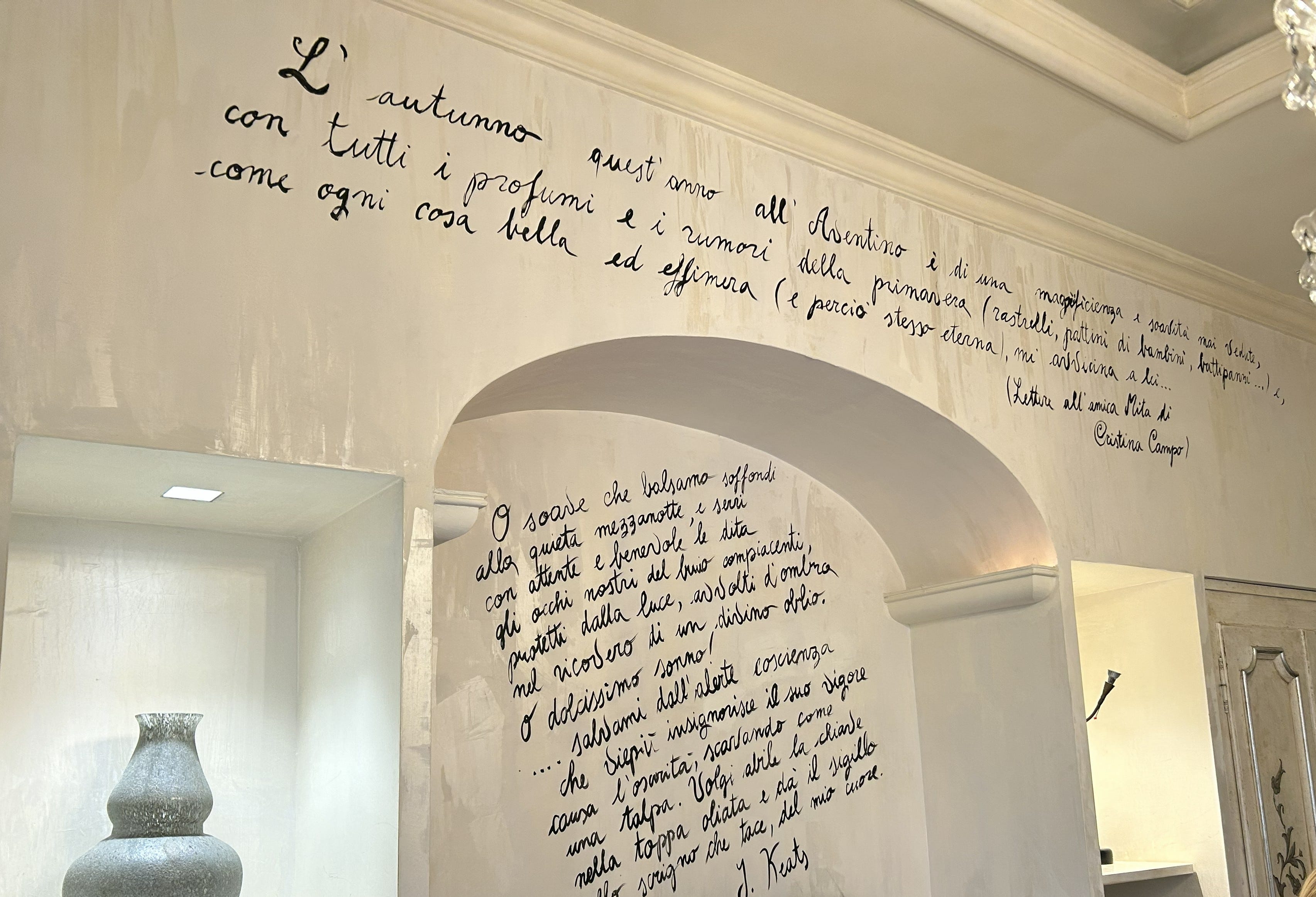
In 1965 the Italian poet Cristina Campo lost, within nine months, her mother, her father, her home and the form of worship that had brought her to God. That autumn she was living in a single rented room at the top of the Aventine hill in Rome, ill and at the end of her nerves. Despite this, it was probably then that she wrote to a friend that the season was of a magnificence and sweetness never seen and, “like every beautiful and ephemeral thing (and for that very reason eternal),” it brought her closer to him. She had found a another way. She called it holding life “with light hands.”
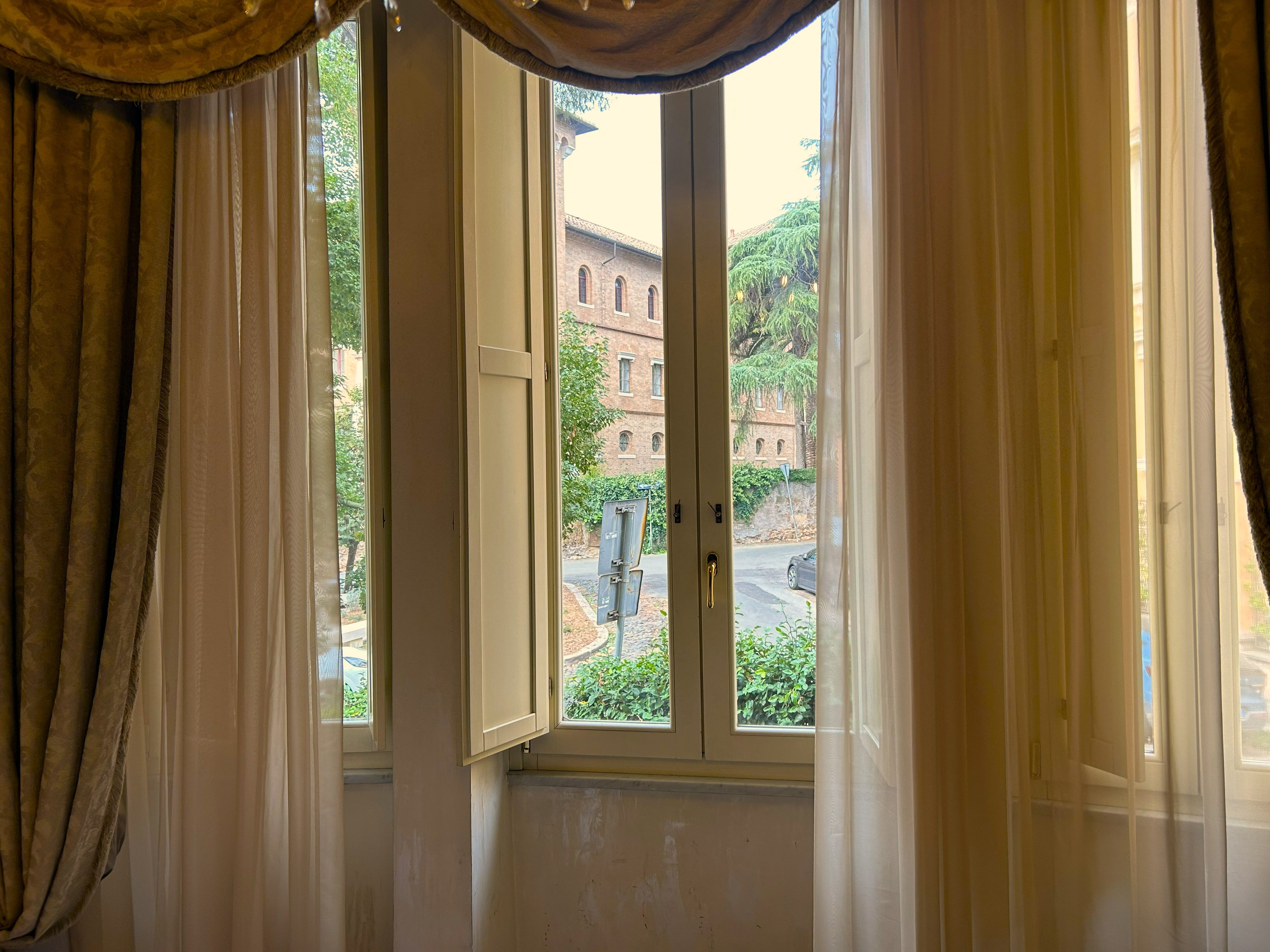
A few weeks ago a friend and I asked to see the room where she wrote these lines. It now belongs to the Hotel Sant’Anselmo, which has painted those lines on its wall. It was smaller than I expected, and in her day even smaller, because since then they have added a bathroom. From its window you can see the Benedictine abbey she loved to visit and in which she loved to pray. It is just across the square, and it is where I live as a monk.
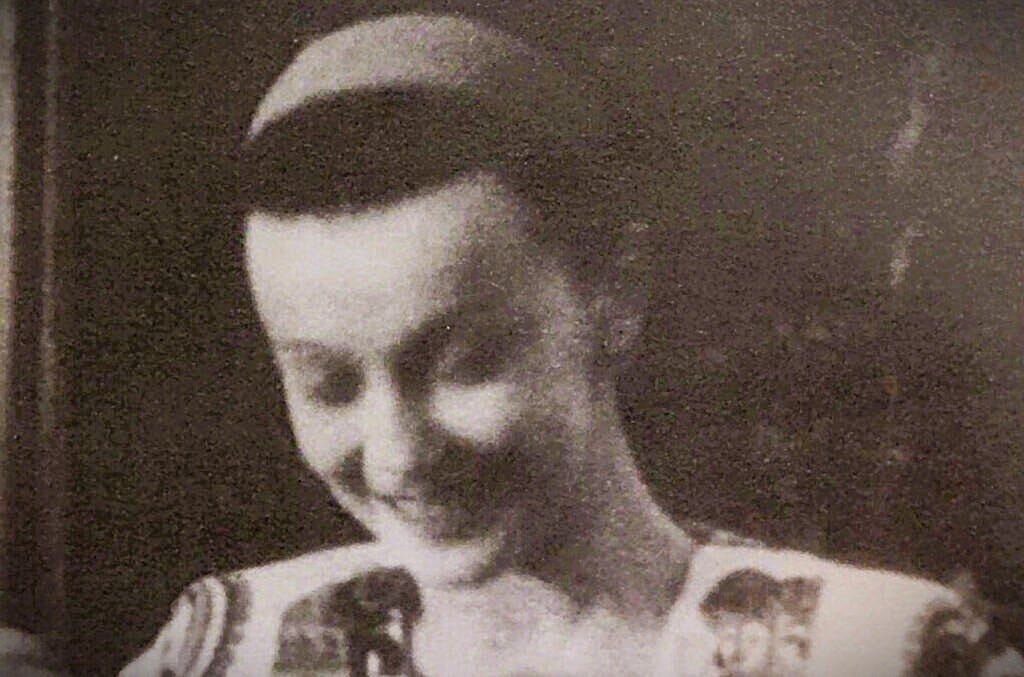
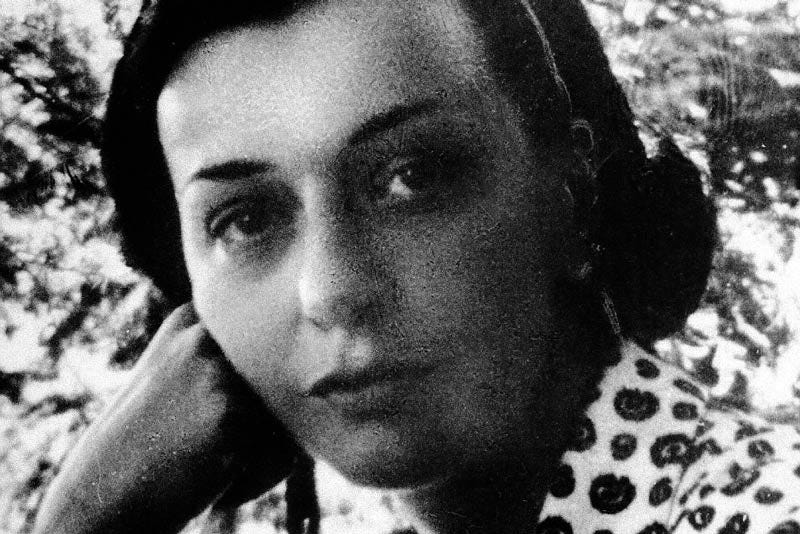
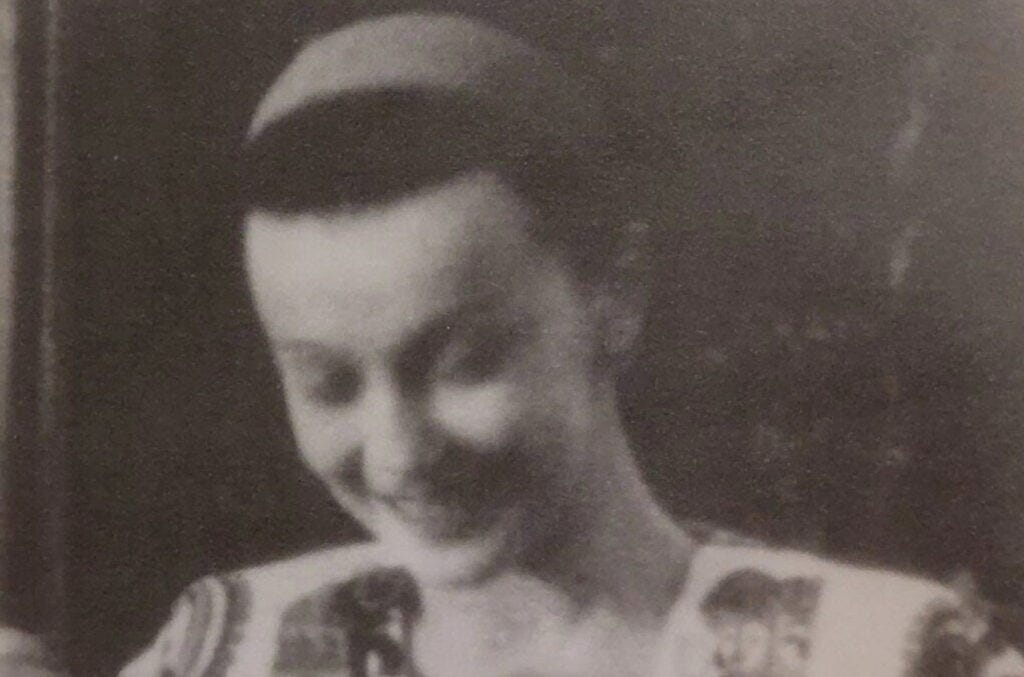
Campo is not a household name, even in Italy. Born Vittoria Guerrini in Bologna in 1923, the only child of the composer Guido Guerrini, she had a heart defect that kept her out of school and close to home all her life. She taught herself languages, translated Simone Weil, Emily Dickinson and John Donne into Italian, and left behind, in Roberto Calasso’s phrase, “a handful of unforgivably perfect pages,” now in English as The Unforgivable and Other Writings.
What she loved
What she loved above all was beauty, and for her beauty was never decoration. The poet Mario Luzi said she “believed perfection existed” and would settle for nothing less. She came to Rome with her parents in 1955, not yet a believer, circling God, as she put it, “like two knights with lances.” On the feast of St Joseph, 1964, she climbed the Aventine with her mother and with Elémire Zolla, the great love of her life, and heard Vespers at Sant’Anselmo, on the same benches where Simone Weil had sat in 1937. Campo later wrote that the evening had been like Adam’s first evening in Eden. “The spark can be ignited by a single, perfect liturgical gesture,” she wrote. All it may take is to see two monks bowing deeply together, first to the altar, then to each other, then withdrawing into the choir.
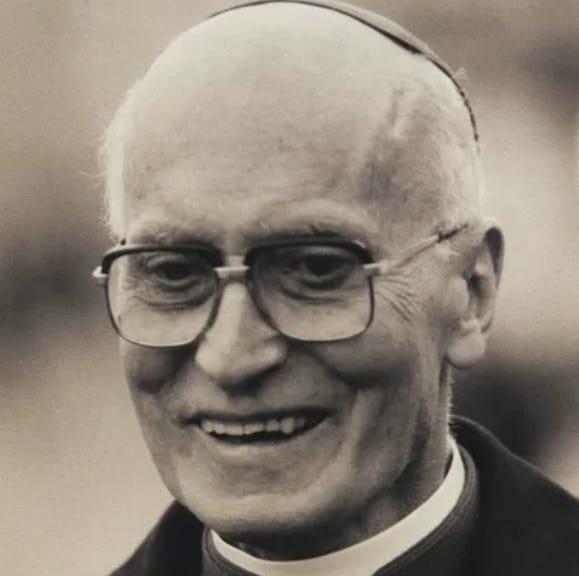
Her guide was Dom Augustin Mayer, a Bavarian monk who was rector of the Pontifical Ateneo of Sant’Anselmo and founder of its Liturgical Institute. He had helped prepare the Second Vatican Council, the gathering of the world’s bishops that opened the way for Mass in modern languages. The man who helped build the house where the reform of the liturgy would be studied became the spiritual father of one of its fiercest critics.
What she lost
Then it was all taken. On Christmas Eve 1964 her mother died without warning; the funeral was held at Sant’Anselmo in the Church’s crypt, an unusual privilege for a lay woman. Campo would later recall that just one week before her mother’s passing they both attended Vespers at the abbey. “Vespers was perfect, as always,” she wrote, “and there sat my Mother, in her dark red cloak... narrowing her eyes and saying: ‘What a beautiful cadence…’”
In March 1965 the changes with the Mass occurring all over the world reached the abbey: microphones appeared, large speakers were placed throughout the church, and Italian started replacing Latin. “Leprosy,” she called it, and she said she would go back only to see the good father, Mayer. But, in fact, she could not stay away. “When the church is empty and dark I go to see it. I feel I love it so much at those moments.”
Her father, paralysed and failing, returned to the sacraments through this good father Mayer, who came to the flat twice a week with the Blessed Sacrament in a gold pyx round his neck. When Mr Guerrini died that June, the whole community sang his Requiem in the form the monks traditionally keep only for their own dead. As they came down from the choir to circle the coffin, Zolla leaned over to Cristina and whispered: “They make you envy the one inside.” Shortly thereafter, the Conservatory that owned the family flat gave her three months to leave.
She moved into the Pensione Sant’Anselmo, just below the abbey. Though today it is considered an upscale hotel, at the time it was no more than a small second-class inn where meals were included in the price of room and board. She brought almost nothing: her books, a crucifix, a small Byzantine Madonna, an image of St Benedict in cowl and hood, her parents’ portraits. “One must be naked and light to carry heavy arms,” she wrote that December. The owner’s daughter, Roberta Piroli, remembers her father as a loud man who often would shout orders down the staircase, everything Campo was not. On one occasion when Roberta was a child, she remembers Campo coming down to the garden, where the family was having a party, to ask them to be a little quieter. She needed her sleep. “We were of the merchant class,” Roberta says, “and she, even if she was poor at the moment, belonged to a more literary and intellectual class. We tended not to mix.”
From that room, grieving and ill, she did the most public thing of her life. She drafted the letter that gathered thirty-seven signatures, among them W. H. Auden, Jorge Luis Borges, Benjamin Britten, Evelyn Waugh and Jacques Maritain, Catholics and non-Catholics alike to ask that monasteries keep the Gregorian chant they had sung her father’s funeral. It reached Paul VI in February 1966.
With light hands
Cristina suffered quite intensely during this period. How did she bear it? Not by holding on harder, and not by loving less. Her ideal had an old Italian name, sprezzatura, Castiglione’s word for the grace that hides its own effort. She wrote an essay on it, “With Light Hands,” after a line Hofmannsthal gave the Marschallin in Der Rosenkavalier as she prepares to lose her young lover: one must hold and let go “with a light heart and light hands.” For Campo it was a moral discipline, founded “like an entry into religion” on detachment, “an obvious indifference to death, a deep reverence for what is higher than oneself.”
She found its master in Christ. “It has been said that a smile never touched the Redeemer’s commanding mouth,” she wrote, “but with what other shade at the corner of the lips and between the brows could certain words have been let fall?”
In her own grief it meant hiding the wound. “Only at night I often wake up crying,” she told a friend. “But don’t talk to me about it, in writing or aloud, understand?” It was the Gospel’s counsel to wash your face when you fast, and she made it a rule: “Let nothing show from the inmost heart; let nothing be known of us but the smile.” It meant prayer: she carried her breviary even to the doctor’s, and loved Compline because it holds “absolutely everything one needs to face the night.” And it meant receiving grief as a gift as well as a loss. “God has been unspeakably tender with me,” she wrote that December. “It is a little intoxicating to find oneself at once in mourning and in peace.”
Much of it she learned from the monks. She could tell, she wrote, by the way a monk raised his hood and bowed after the reading, which one was a true monk, one who had thrown his life “into the other country.” She wanted no fame for herself. She liked to say she “has written little and would like to have written less,” and she never held office in the Italian section of Una Voce, the association she helped found to defend the old liturgy.
Letting go
Even the good father was taken: in 1966 the monks of his home abbey in Bavaria elected Mayer their abbot. In 1968 Campo moved to three rooms of her own a few steps away, at Piazza Sant’Anselmo 3. By then she no longer went to the abbey’s services and found refuge in the Byzantine liturgy of the Russicum across the city. But she never left the square.
Her last years were the hardest: a failing heart, sleepless nights, what she called “the horrible knot” of anguish. Even then she wrote: “’I do not know the way, but you know it’ is the only reasoning possible when one walks in the dark.” Her cat had just had kittens, and she wanted to learn their “wonderful abandonment,” the way they let themselves be lifted “to the highest places (my shoulder).” “I literally die of fear,” she admitted, “like the kitten lifted suddenly onto a very high shoulder. What to do? Nothing. The one who lifts me knows what he is doing.” In her last letter to her friend Mita she wrote: “There is sun today on the terrace, and I must try to take that sun to its last caress, without a thought in the world. It isn’t easy, but I must do it.”
She died in January 1977, three months short of fifty-four. A monk of Sant’Anselmo carried the news to her friends, and her funeral was held in the abbey church. Her papers, everything toward the book on the liturgy she never finished, went into a crate nobody claimed and were very probably thrown away. She had held even her own work with light hands.
Ephemeral, and therefore eternal
Mayer lived until 2010. He became a cardinal, with Sant’Anselmo as his titular church, and in 1988 the first president of the commission the Holy See set up for Catholics attached to the older liturgy. The church she had watched from her window became his, and the people she had fought for became his charge. She did not live to see it.
In the autumn letter she never says who “he” is: her father, God, perhaps both. But she says why the season brought her closer: because it was beautiful and passing, and for that very reason eternal. That is her answer to the question we began with. What we love will be taken. Holding it harder does not keep it, and loving it less is only a smaller death. We can hold it with light hands: love it entirely, let it go when it is asked of us, and trust that the one who lifts us knows what he is doing.
Her mother, her father and she herself were all carried out of the church across the square. We still sing Vespers there every evening, and still bow, two by two, to the altar and to each other. She thought a gesture like that, done perfectly, could change a life. It changed hers.
Sources
• Cristina De Stefano, Belinda e il mostro. Vita segreta di Cristina Campo (Milan: Adelphi, 2002)
• Cristina Campo, Lettere a Mita, ed. Margherita Pieracci Harwell (Milan: Adelphi, 1999)
• Cristina Campo, Gli imperdonabili (Milan: Adelphi, 1987), esp. “Con lievi mani”
• Cristina Campo, The Unforgivable and Other Writings, trans. Alex Andriesse (New York: NYRB, 2024)
• Simona Abis, “Cristina Campo e l’etica della sprezzatura,” Studi Novecenteschi 38, no. 81 (2011): 171–83
• Hugo von Hofmannsthal, Der Rosenkavalier, Act 1
• Jaspreet Singh Boparai, “Cristina Campo,” The Lamp, Lent 2025
• “Conversione e passione di Cristina Campo” (I–II), Infovaticana, June 2026
• Holy See Press Office, biography of Card. Paul Augustin Mayer, OSB
Recollections of Roberta Piroli, in conversation with
This was a beautiful read. Thank you, Father Joseph!