

They say the devil is a liar. Fr. Gabriele Amorth said he was also a bore.
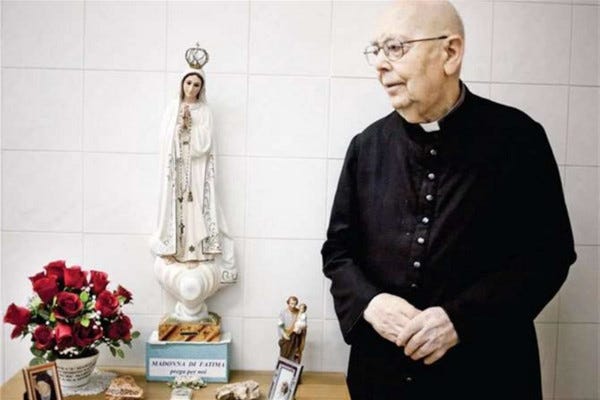
It’s been 100 years since Fr. Amorth was born in Modena, on May 1st, 1925—a bright and stubborn boy who would grow up to become the most famous exorcist of the Catholic Church. Today, across Italy and in corners of the Catholic world, his name still evokes strong responses: awe, curiosity, sometimes disbelief, and often a kind of quiet, grateful reverence. For some, he’s a larger-than-life figure. For others, he’s a story whispered in line for confession. For me, he’s something more personal: a witness that faith is serious, but not grim.
He was a priest of the Pauline order, a son of St. Paul who believed in the power of words to convert hearts. He wrote with clarity, spoke with conviction, and prayed like a man whose whole life depended on it—because he knew that, really, it did.
But Amorth was no caricature of piety. He had that rare gift—the kind of twinkle-eyed confidence that comes from knowing who wins in the end. He loved Mary with a devotion that made you want to pick up your Rosary. He wasn’t afraid to look evil in the eye, but he never gave it more airtime than it deserved. Satan, he liked to say, was noisy and proud—but God was quiet and victorious.
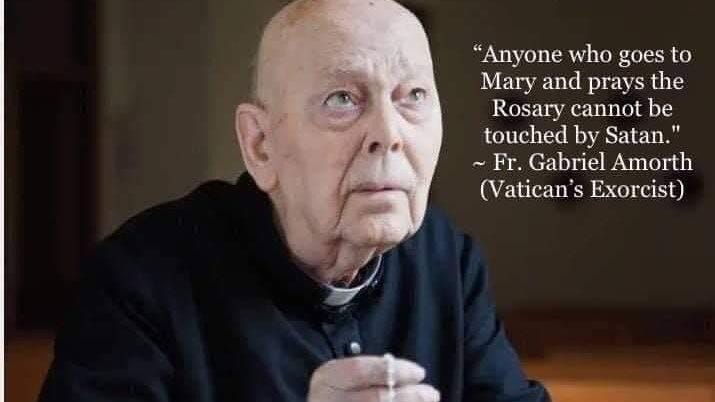
And yes, he laughed. If you were expecting horror-movie intensity, you’d be caught off guard by his disarming humor. “The devil is a bore,” he once told an interviewer. “He repeats himself. He doesn’t know how to love.” There was more power in that shrug than in a thousand cinematic exorcisms.
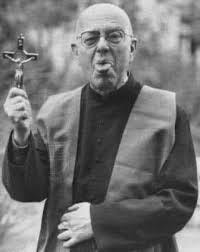
He became an exorcist late in life, appointed by the Vicar of Rome at the age of 60. He had been mentored by Fr. Candido Amantini, the holy Passionist who served for decades at the Scala Santa. When Fr. Candido could no longer serve, Amorth was chosen to continue the fight—not with special effects, but with fasting, prayer, and the sacraments. He once said that a single good confession was more powerful than a hundred exorcisms.
It was never about drama. It was about grace.
That’s why his legacy endures—not just in books or documentaries or even Hollywood’s strange fascination (he might have found Russell Crowe’s portrayal amusing, and gently corrected the theology), but in the quiet strength of faithful Catholics who keep going. Who pray the Rosary. Who believe in mercy. Who know that darkness is real, but that light is stronger.
He died in 2016, and I sometimes imagine him now—peaceful, laughing still, maybe with his old mentor Candido, still praying for those of us in the trenches.
If you want to honor him today, you don’t need to light candles or speak Latin or look under your bed.
You just need to go to Mass.
Say a Rosary.
Forgive someone.
Tell the truth.
And smile.
Because as Fr. Amorth knew, Christ is risen—and the devil can’t stand that.
Thank you for this peek at this man. God bless.
Great article.