

The Rock and the Warning
Do you know the difference between Judas and Peter? It may be the most important difference in the Gospels.
There are moments in the life of faith when you realize everything turns on a choice.
Not just the choice to believe in God—
but to believe that He still believes in you.
In Holy Week, two faces emerge from the shadows of Gethsemane and the firelit courtyard:
Judas Iscariot, and Simon Peter.
They are not strangers. They are not symbols. They are men.
They walked with Jesus. Heard His voice. Ate the bread He broke.
And in the end—they both failed Him.
But only one is remembered as the Rock.
The other became a warning.
Judas was quiet.
Not the brash one. Not the loud one.
He was the one with the money bag.
The one who asked sharp questions, feigning concern for the poor while planning betrayal.
He was, in short, practical.
Reasonable.
Calculating.
He didn’t storm out of boats to walk on water.
He didn’t swing a sword in panic.
He kissed Jesus—softly, deceptively.
Then watched Him be taken away.
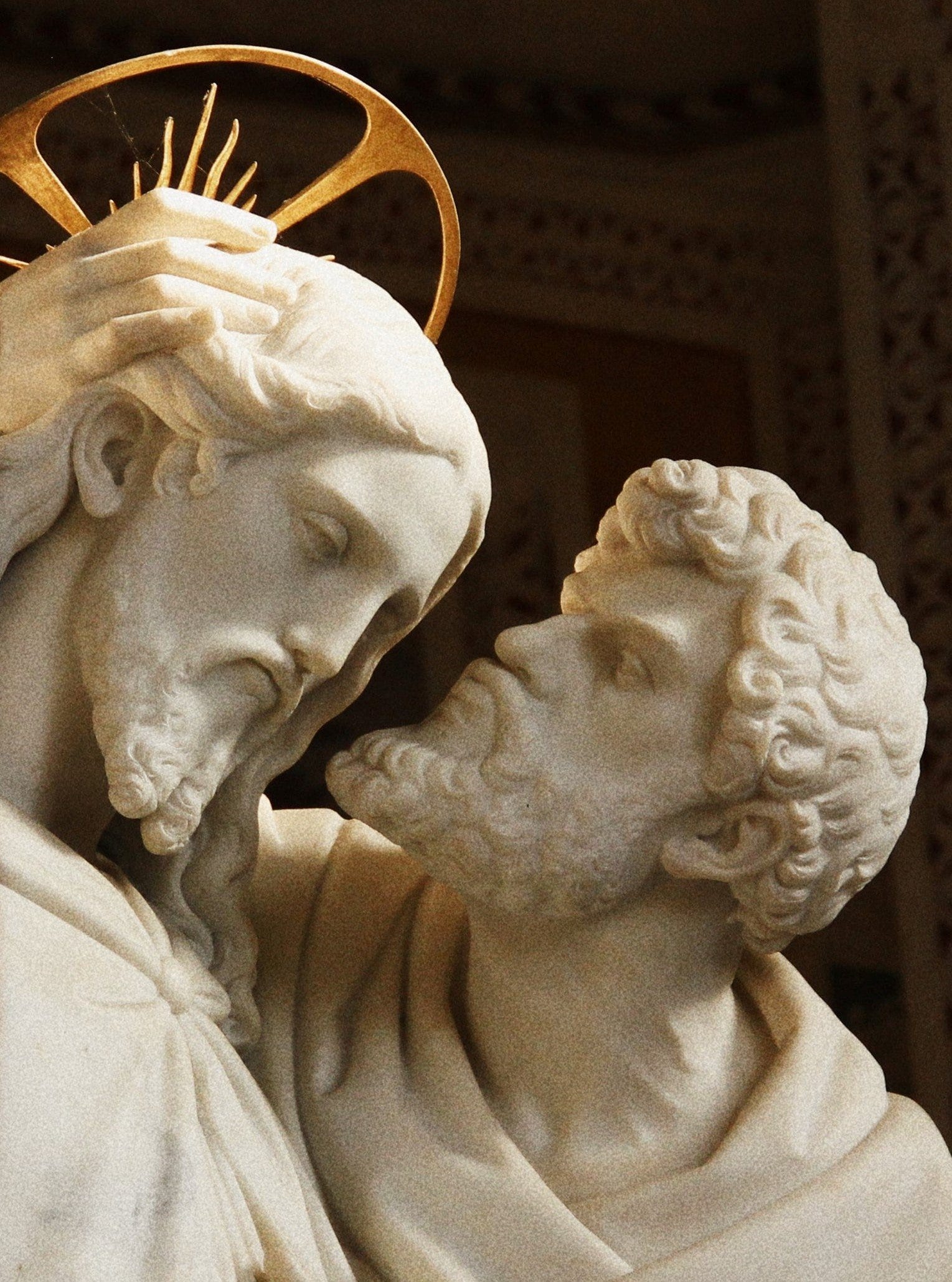
Later, when the weight of it hit him, he tried to undo it.
He gave the money back.
Confessed the truth: “I have sinned in betraying innocent blood.”
But—and this is the whole tragedy—
he never turned toward Jesus.
He turned inward.
And despair swallowed him whole.

Peter was different.
Impulsive.
Hot-blooded.
Loyal to a fault.
He swore he would die with Jesus.
Then he failed Him three times before sunrise.
But the difference lies here:
Peter wept.
He went out and sobbed bitterly.
He stayed near the others.

And when the Resurrected Christ came to find him—
He did not scold.
He asked only one question, three times:
Do you love Me?
And Peter said yes.
That yes changed the world.
People want to make sense of this.
In the comments and conversations that follow a story like this, they start to tease out the difference between denial and betrayal.
Between a denouncing glance and a dagger to the back.
It’s true. There’s a difference.
But maybe the bigger difference is this: what each man believed about mercy.
Judas believed his sin was too great.
Peter believed Jesus was greater still.
That’s what made the Rock.
That’s what broke the man who couldn’t be forgiven—because he refused to let himself be.
But what about Christ as the Rock?
Some readers push back here: Wasn’t Christ the Rock—not Peter?
They point to the Greek: Petros (Peter) and petra (rock).
But this distinction melts away when you consider the likely original language of the moment: Aramaic.
Jesus would have said:
“You are Kepha, and on this kepha I will build my Church.”
No pun. No ambiguity.
Same word. Same meaning.
The Gospel’s Greek translation uses Petros for Peter (a masculine name form), and petra for “rock” (a feminine noun)—
but the Church has always understood the point:
Jesus names Peter the foundation.
Not because he’s flawless.
But because he repents.
Not because he stood tall.
But because he fell, wept, and stood again.
Yes, Christ is the cornerstone.
But Peter—redeemed, renamed, and restored—
is the first stone He lays.
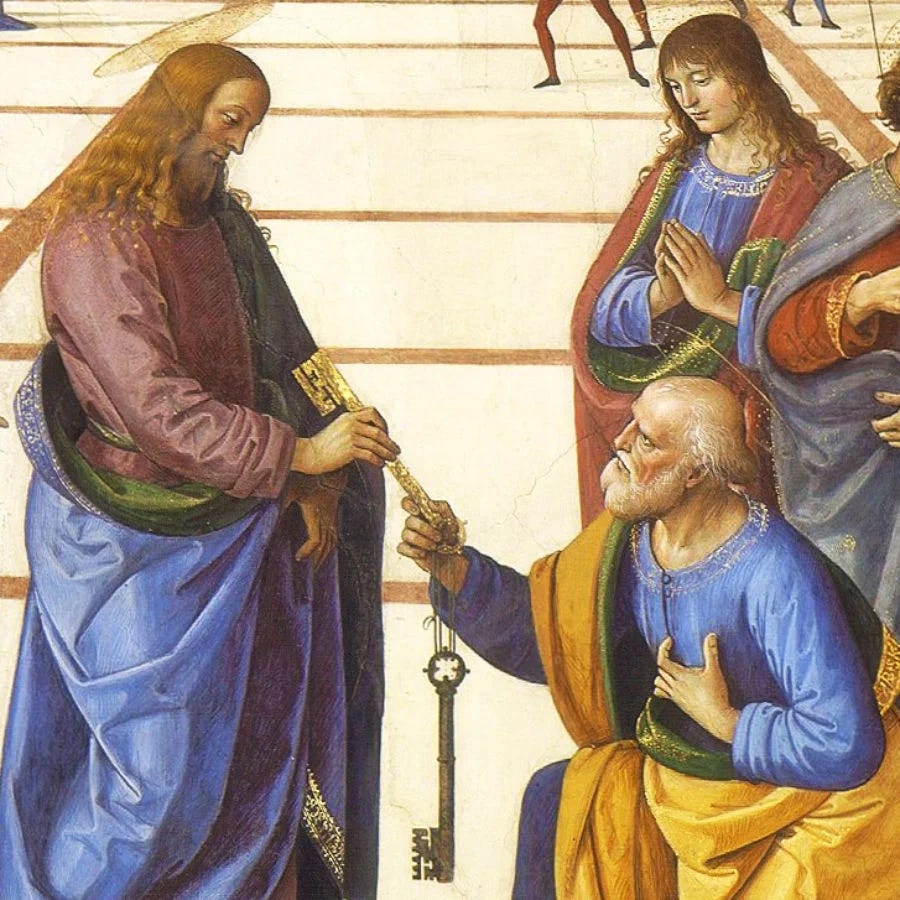
Imperfect.
Repentant.
Faithful.
Peter’s story is hope for anyone who has ever fallen—
and longed to be restored.
Judas’ story is a warning:
that even those who are near to God can be lost,
if they let shame have the last word.
So the real question isn’t: Have I sinned?
We already know the answer to that.
The real question is:
Do I believe Christ still wants me?
Still calls me?
Still loves me?
Peter did.
Will you?

You Are Peter: The Rock and the Reason
There’s a verse tucked in the middle of Matthew’s Gospel that has launched a thousand arguments and built a Church.
It’s the moment when Jesus turns to a man—impulsive, imperfect, brave—and says something so grand, so unthinkably permanent, that people are still wrestling with it two thousand years later:
“You are Peter, and on this rock I will build my Church.” “And the gates of Hades shall not prevail against it.”
Scholars will point to the Greek. In the original text, the line reads: σὺ εἶ Πέτρος—You are Petros— καὶ ἐπὶ ταύτῃ τῇ πέτρᾳ—and on this petra— “I will build my Church.”
And the question begins. Why two words? Why not one? Is Jesus making a distinction?
Some say yes. That He isn’t building on Peter, but on Peter’s confession. Or on Himself—as the true and only Rock.
It’s a noble instinct, to defend the idea that Christ is the foundation. And He is. But there’s more here.
Because Jesus wasn’t speaking Greek that day. He was speaking Aramaic—the language of the people, the language He shared with His disciples in the streets and on the road and around the fire.
And in Aramaic, there is no distinction. Jesus would have said:
“You are Kepha, and on this kepha I will build my Church.”
Same word. Same sound. Same stone.
Later, when the Gospel writers translated the moment into Greek, they used Petros for Peter’s name (because petra was feminine and didn’t suit a man). But the meaning remains.
Jesus was naming Peter the Rock.
The early Church knew this. Felt it. Trusted it.
You can hear it in the voices of the Fathers:
Tertullian, around the year 200: “Peter, who is called ‘the rock on which the Church should be built.’”
Origen, not long after: “Peter...upon whom is built the Church of Christ.”
Cyprian of Carthage, writing from a world still fresh with persecution: “On him [Peter] He builds the Church.”
They were not confused. They knew who Jesus was talking about.
Of course, Peter is not the cornerstone. That’s Christ—always. (Ephesians 2:20 says so plainly.)
But Peter is the first stone laid down. The first man in whom we see that repentance doesn’t disqualify you—it qualifies you. He is the Rock, not because he never fell—but because he fell, and got up, and believed that love was still possible.
That’s what Jesus built on. Not perfection. Repentance.
A man who knew what it was to fail. And who let himself be found.
That is the Rock. And if He could build on Peter—He can build on you.
I do believe Jesus’s mercy and love is bigger thsn my sin and He can bring good from even my worst, but sometimes I have a hard time forgiving myself and the past confessed sin still haunts now and then and leads to self loathing that makes me keep Jesus at a distance wheb I need most to run to Him